Nuhu Ribadu: The Anatomy of an Egregious Persona
By Ben Bature
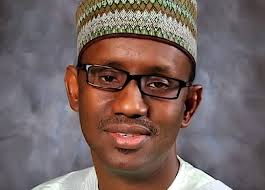
It was 2003 when Mallam Nuhu Ribadu was appointed Chairman of the Economic and Financial Crimes Commission (EFCC) by President Olusegun Obasanjo, following the recommendation of the then Attorney General, Kanu Agabi. After his appointment, Ribadu found himself in a quandary. Apart from the letter of appointment, he had nothing—no office, no staff, and no budget.
In search of help, he approached Ibrahim Shehu Njidda, a director at the Bureau of Public Enterprises (BPE), who introduced him to Mallam Nasir El-Rufai. Concerned about Ribadu’s predicament, El-Rufai listened to his request and assured. At the top of the list was urgent funding to sustain operations until the EFCC could be formally included in the federal budget. El-Rufai agreed to assist.
Going forward, the ONSA, which office Ribadu now oversees, provided him with a space in a block of flat, which he shared with Sen (Dr) Ben Obi, within the precinct of the villa.
Next, El-Rufai approached the Minister of Finance to secure funding, but his efforts hit a brick wall. Undeterred, he explored options within the BPE. Finding a viable opportunity, he asked Ribadu how much he needed. Ribadu, modest in his request, asked for ₦20 million. El-Rufai countered with ₦100 million, reasoning, “It’s better to have money and not need it than to need it and not have it.”
With that, El-Rufai submitted a memo requesting ₦200 million to Vice President Atiku Abubakar, who chaired the Privatisation Council. Atiku approved ₦100 million, which El-Rufai promptly made available to Ribadu. This initial support enabled Ribadu to establish the EFCC’s foundation, setting the stage for his rise to national prominence.
Exposed!! Popular Abuja doctor revealed how men can naturally and permanently cure poor erection, quick ejaculation, small and shameful manhood without side effects. Even if you are hypertensive or diabetic . Stop the use of hard drugs for sex!! It kills!
However, years later, the friendship between the two men soured. Their falling-out became so pronounced that El-Rufai publicly referred to Ribadu as a “megalomaniac,” a sentiment echoed by several high-ranking Nigerians. According to a mutual acquaintance of Ribadu and and El-Rufa’i, the former Director-General of the DSS, Yusuf Magaji Bichi, had described Ribadu in harsh and unflattering terms. Over time, similar accounts have emerged, painting a consistent portrait of a man many now openly label as egregious.
The Weight of “Egregious”
“Egregious” is not a word to be used lightly. It describes conduct that is shockingly bad, outrageously unethical, and flagrantly self-serving. It is a behaviour so far beyond the pale that it corrodes trust and poisons every environment it touches.
This isn’t hyperbole. History is full of figures whose egregious tendencies reshaped societies — from Hitler and Stalin to Pol Pot and Idi Amin. While Ribadu is not a dictator nor a mass murderer, the traits — narcissism, Machiavellianism, strategic manipulation — are unmistakable. The psychology of such personalities, often captured by the “dark tetrad” (narcissism, psychopathy, Machiavellianism, and sadism), explains why they thrive in positions of power, leaving toxicity, distrust, and broken systems in their wake.
Duplicity in Action
Ribadu’s public record is riddled with contradictions and dangerous lapses.
When he chaired the EFCC, Wikileaks revealed that he disclosed sensitive, ongoing investigation details to the U.S. ambassador — allegedly as a “failsafe” against political backlash. That disclosure, unauthorised and reckless, wasn’t just an ethical breach; it compromised national security and undermined the very institution he claimed to defend. In any serious democracy, such conduct would have ended his career.
Professor Farooq Kperogi laid bare this duplicity years ago. He wrote of Ribadu’s two faces: publicly proclaiming that President Obasanjo was “squeaky clean,” while privately admitting to U.S. diplomats that Obasanjo was “more corrupt than Abacha.” Likewise, Ribadu flatly denied investigating Patience Jonathan, but leaked cables confirmed he had. “I think Ribadu deserves an Academy Award for his great acting and lying skills,” Kperogi quipped — and he wasn’t wrong.
Principles for Sale
For years, Ribadu held up Bola Ahmed Tinubu as an emblem of corruption, once describing his case as having “international dimensions.” Today, that same Ribadu serves under Tinubu as National Security Adviser, an appointment many rightly see as a desperate attempt to polish the image of an unpopular administration.
His political zigzagging — from the Action Congress of Nigeria to the PDP and back again — has stripped him of any claim to principle. What remains is the portrait of a man for whom power and access matter more than integrity or consistency.
The Cost of Egregious Leadership
When egregious personalities occupy high office, institutions suffer. Strategic manipulation may yield short-term gains, but the long-term cost is immense: trust erodes, governance decays, and the public grows ever more cynical. In Ribadu’s case, what should have been a legacy of institutional reform and anti-corruption crusading is instead one of opportunism and betrayal.
The tragedy here isn’t just about one man. It is about what his rise — and his compromises — say about a system that rewards duplicity, punishes principle, and normalises egregiousness.
Bature resides in Jos.