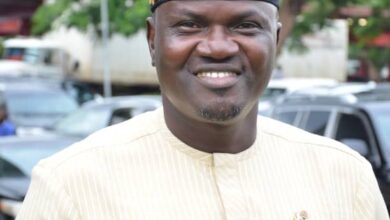
A Northern Star In Yorubaland: Senator Yari’s Chieftaincy And Alaafin’s Promotion Of Nigerian Unity

The ancient palace of the Alaafin of Oyo was a tableau of Nigeria’s complex yet unifying tapestry in December 2025 in a ceremony rich with Yoruba tradition when His Imperial Majesty, Oba Abimbola Akeem Owoade I, placed the symbolic Akoko leaf on Senator Abdul’aziz Abubakar Yari, a Hausa-speaking former governor of North-West Zamfara State as the Obaloyin of Yorubaland.
This historic installation, which also saw the son of President Bola Tinubu, Barrister Seyi Tinubu invested as the Okanlomo of Yorubaland, transcends a mere chieftaincy celebration to a historic elevation of Nigeria’s diversity above ethnic enclaves. This emerges as a profound, strategic gesture aimed at further fostering national bonds and friendship, facilitating a desired understanding and taking ownership of the national peace process amid mutual suspicions that endemic insecurity has enabled.
As a statesman and iconic nationalist, Senator Yari’s journey from the corridors of power in Zamfara State to the heart of Yorubaland’s traditional institution bears a compelling narrative of evolving national leadership. This move, orchestrated by one of Yorubaland’s most revered monarchs, is widely interpreted as a deliberate effort to build inter-ethnic trust, promote cultural harmony, and lower the tensions fueled by insecurity and economic pressures, and is a clear representation of acceptance that demands inter-ethnic roles from Yari even as a non-Yoruba. As Nigeria grapples with these centrifugal forces, the symbolic power of a Northern political heavyweight being embraced as an Obaloyin of the Yoruba realm offers a glimmer of hope for a more united future, which confers in the lawmaker, a deeper responsibility to promote broad national harmony.
The installation of Yari as Obaloyin of Yorubaland on December 21, 2025, in Oyo has become a significant and yet historic gathering of political titans and heavyweights, underscoring the event’s national importance as the government activities literally moved to the ancient town with the array of members of the Federal cabinet, lawmakers and eminent and distinguished personalities across all sectors. The arrays of dignitaries that landed at the newly upgraded Ladoke Akintola International Airport in Ibadan were indeed the first of its kind in recent history with private and commercial aircraft adorning the facility like bees would sweep on the comb before convoys of eminent Nigerians took turns to proceed to the Palace of the Alaafin for the installation of Senator Yari and Barr. Tinubu.
A formidable delegation of Northern political leaders, including the immediate-past Senate President Ahmad Lawan and Senator Aminu Waziri Tambuwal, former Kano State governor and immediate-past chairman of Nigeria’s ruling party, the All Progressives Congress (APC), Dr. Abdullahi Umar Ganduje and former Sokoto State Governor, Senator Aliyu Magatakarda Wamakko, among other eminent and respected Northern political bigwigs demonstrated the significance of the event.
Their presence signalled strong cross-regional support and transformed the ceremony into a powerful political statement on national integration. Beyond the North-South friendship, the physical attendance of the installation by Senate President Godswill Obot Akpabio, himself a former two-term governor of oil-rich Akwa Ibom State; a man nicknamed as an ‘Uncommon Governor’ for developing the state through enviable infrastructure projects further deepened the weight of the installation and its inter-ethnic bond for which Senator Yari was singled out by Oba Owoade as befitting of promoting unity, reconciliation and enjoying the acceptance to play such a role for national unity.
Exposed!! Popular Abuja doctor revealed how men can naturally and permanently cure poor erection, quick ejaculation, small and shameful manhood without side effects. Even if you are hypertensive or diabetic . Stop the use of hard drugs for sex!! It kills!
Bestowing the Obaloyin of Yorubaland title on Senator Yari by the Iku Baba Yeye, Alaafin Owoade, was therefore a broader gesture that directly challenges prevailing narratives of division and blurs the tension of rejection and mutual distrust.
In order to appreciate its significance, one must understand the profile of the recipient. Senator Abdul’aziz Abubakar Yari, born in 1968, is a seasoned politician from Zamfara State who served as Governor from 2011 to 2019 and was unanimously elected by his peers as Chairman of the influential Nigeria Governors’ Forum (NGF) at that time to lead his peers on governmental matters. Yari currently represents the good people of Zamfara West in the Senate, where he chairs the Committee on Water Resources.
Senator Yari was recently appointed as the Chairman of the Board of Geregu Power Plc in clear recognition of his unblemished corporate and public service governance credentials.
The Zamfara West Senator also inaugurated humanitarian initiatives, such as scholarship programmes to give opportunities to his constituents to access education. He has also, at different times, initiated healthcare outreach in his constituency for people in need.
This blend of political pedigrees as a successful player in the executive and legislative organs of government who successfully managed Zamfara State and a lawmaker representing his senatorial district at the upper chamber of the National Assembly as well as Yari’s cross-sectoral influence have singled him out as a prominent figure whose experience and serving break beyond political and humanitarian callings to the traditional and cultural duties with national expectations. Honouring such an iconic personality indeed stretches beyond the accolades or the investiture but a bold move by the Alaafin in acknowledging his national stature while consciously looking past ethnic and religious lines to attract unblemished hands that could shake beyond politics to promising natural lines for national friendship from Zamfara in the North-West to the Yorubas of the South-West.
The Alaafin’s decision is not made in a vacuum. It comes when Nigeria’s social fabric is under severe strain, making the need for unifying symbols more urgent than ever.
The crisis of banditry, kidnapping, and terrorism has triggered catastrophic food insecurity, with a UN report warning that nearly 35 million Nigerians could face severe hunger by mid-2026. The insecurity has also led to a dangerous socio-ethnic fissure within the North itself, with the long-held “Hausa-Fulani” identity fracturing as communities scramble for safety and assign blame.
North-South tensions and “influx” anxiety have, of late, heightened tension of violence and economic hardship driven by internal migration, with many citizens from the North seeking refuge and opportunity in the more stable South-West. This influx has, in some quarters, bred resentment and fear among host communities, concerned about pressures on local economies and the potential spillover of insecurity.
This has fed into deeper historical suspicions between regions, making gestures of kinship and trust politically and socially vital.
Nigeria has a long history of inter-ethnic wariness. As noted in studies, marriages between northern and southern groups have been historically rare, and social organisation often follows ethnic lines. While the post-Civil War constitution attempted to foster national parties, ethnic and regional identity remains a potent and often divisive political force.
In this context, the Alaafin’s action is a masterstroke of traditional diplomacy using the deep respect accorded to the throne to model a new kind of relationship—one based on strategic trust and mutual respect rather than suspicion to lower these tension but instead flip the positive part of accommodation and understanding, creating an inclusive natural and culturally relatable platform and atmosphere to douse insecurity.
The installation of Senator Yari as Obaloyin is a powerful symbol, but symbols must be followed by substance. The true test will be whether this gesture can catalyse tangible progress toward unity. It sets a precedent for other traditional and political leaders across both regions to initiate their own confidence-building measures.
It also offers a narrative counterpoint to the divisive rhetoric often dominating the airwaves. It tells a story of shared guardianship and respect that can, over time, influence public perception and reduce prejudice.
For the nation, this also demonstrates that Nigeria’s revered traditional institutions can play a proactive, statesman-like role in national cohesion, beyond their cultural domains.
As the ceremonies concluded and Senator Yari stood as the Obaloyin of Yorubaland, the moment captured a simple yet revolutionary idea that a son of Zamfara can be a bridge with Oyo as well as Yorubaland. In a nation where identity is often a battleground, the Alaafin of Oyo has used the deep language of tradition to articulate a vision for a shared future.
Similarly, this chieftaincy title is more than an honour for one man; it is an invitation to the entire nation. It is a challenge to look beyond the stereotypes, to separate criminal elements from entire ethnic groups, and to build alliances on the foundation of our common humanity and shared national destiny. While the path to lasting peace and unity remains fraught with challenges, such deliberate acts of bridge-building light the way forward, proving that our diversity, when embraced, can be our greatest strength rather than our most volatile weakness.
Akinola, an APC chieftain, is chairman of Akinza Group, Abuja.